 Nabhya
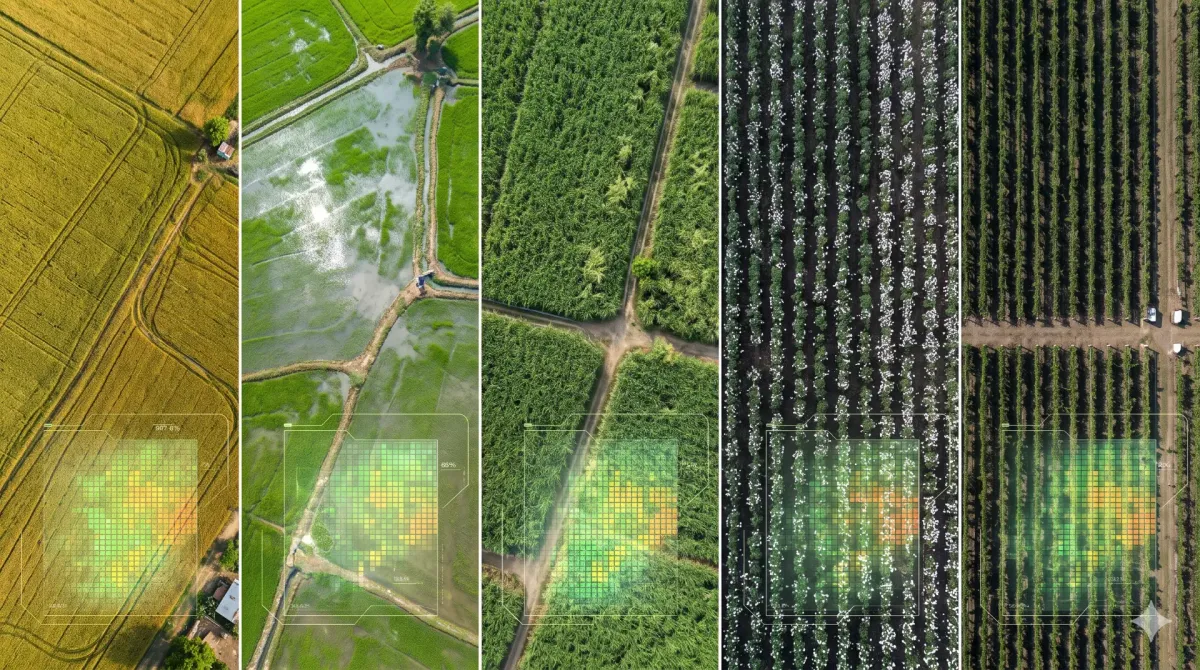
Wheat (rabi)
Scout before irrigation and top-dressing decisions. Look for strips of low vigour along irrigation lines, field edges and low spots — often a sign of uneven water reaching the plants.
Paddy / rice
Fly after transplanting to check establishment, and again ahead of nitrogen top-dressing. Standing water and glare are excluded from the analysis, so the map reflects the crop rather than the water. Patchy low-vigour areas are where to check stand count and nutrient status.
Sugarcane
In this long-duration crop, repeated captures through the season help spot blocks falling behind. Capture near midday to reduce row shadows, and compare zones within each block rather than across dates.
Cotton
Early-season vigour maps highlight weak patches worth walking first. Use them to direct scouting for pest or water issues rather than spraying the whole field.
Grapes
Block-level vigour maps help target canopy work and irrigation in vineyards. Fly along rows at a consistent height so each frame covers similar canopy.
Capture tips for every crop
- Fly straight down (nadir) at a consistent height
- Avoid heavy cloud shadow moving across the field
- Treat results as a ranking within today's frame, then confirm on the ground